Thursday, 18 October 2012

The Railwayman


It was with sadness that I switched on the radio last week to learn of the death of Eric Lomax at the age of 93.

His remarkably powerful book, The Railwayman was excruciatingly hard to read in places, and must have been even more painful for Lomax to have written.

It charts his harrowing experiences as a Japanese prisoner of war in 1942. Captured in Singapore, he was a prisoner at the Kanchaanaburi camp in Thailand. Here guards were to discover Lomax's homemade radio for which he and his cell mates were subjected to the most horrific torture. During these nightmare episodes his English speaking interpreter would repeatedly demand that he confess to espionage. But knowing that if he did he'd be summarily executed, he remained steadfast.

Like so many victims of torture, Lomax's experiences haunted him in later life and eventually contributed to the break-up of his marriage. It was only after remarrying in 1983 that he was to get help from the then newly formed Medical Foundation for the Care of Victims of Torture. And it was here that he came across a press cutting from the Japan Times that told of an ex-Japanese soldier's quest to help the Allies locate the graves of their dead; a task for which he claimed he had earned their forgiveness. To Lomax's astonishment, the ex-soldier in question was none other than Takashi Nagase, the interpreter who had presided during his torture sessions all those years ago. For the next two years Lomax carried this crumpled piece of paper around with him but did nothing until he eventually acquired a translation of Nagase's memoir in which his former interrogator explained how shame had led him to build a Buddhist shrine beside the infamous 418 mile railway line to Burma built by Allied slave labour. And only then it was Lomax's wife Patti who contacted Nagase. "How", she asked, "can you feel 'forgiven' if this particular Far Eastern prisoner-of-war has not yet forgiven you?" It was enough to bring the two men together after more than half a century. For the remainder of their lives these two men were to forge the closest of friendships.
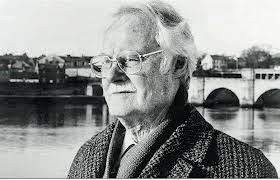


In 1996, Lomax published his memoir entitled The Railwayman. The film based on the book is due for release next year with Colin Firth in the title role.

Eric Lomax was born on May 30 1919 and died on October 8 2011. He is survived by a son and daughter.
Alex Pearl is author of Sleeping with the Blackbirds


Saturday, 1 September 2012

Time to apologise for this ludicrous apology

It's ironic that the GrĂ¼nenthal Group, the German company behind the thalidomide tragedy of the 1950s and 60s, should choose to make a half-hearted apology to its surviving victims during the Paralympics 2012 - the world's largest stage for athletes with disabilities.

While the nation has pulled together and come out in huge numbers to admire and support these remarkable athletes, there has been much talk about the positive spin-off of the paralympics in terms of making this country more caring for those with disabilities.

So against this backdrop, this rather disingenuous apology 50 years after the event comes like a kick in the teeth. And it has understandably annoyed the Thalidomide Agency UK, which has campaigned tirelessly for victims of the drug. This morning I woke up to hear thalidomide survivor, Nick Dobrik speak most articulately on Radio 4's Today programme. "An apology", he said, "should be an unreserved apology and not a conditional apology. It is strange when a company gives an apology which is not the truth. We feel that a sincere and genuine apology is one which actually admits wrongdoing. The company has not done that and has really insulted the thalidomiders."

The drug which was supposed to cure morning sickness was never properly put through its drug trials and many at the time were critical. And it wasn't until 1961 when an Australian doctor, William McBride, wrote to the Lancet after noticing an increase in deformed babies being born at his hospital to mothers who had taken thalidomide, that alarm bells started to ring. The drug was removed from the market later that year.

It took another seven years before any compensation was paid out in the UK by the distributer Distillers Biochemicals Limited (now Diageo). And this was only because Harold Evans, then editor of the Sunday Times, had launched a campaign on behalf of the sufferers. This said, the compensation figure finally reached was derisory - just £28 million.

There are no fewer than 458 people in this country suffering with the after-effects of one company's criminal incompetence, and the cost to adapt each and every one of these victim's lives must run into frightening numbers. But more significantly, let us not forget those who didn't survive. It is estimated that for every thalidomide survivor, at least ten babies were killed by the drug before or after birth.

So perhaps now, while the world's eyes are on the paralympians, this would be a good time for GrĂ¼nenthal chief executive Harald Stock to put his company's money where his mouth is and make a genuine, heartfelt apology.

Alex Pearl is author of Sleeping with the Blackbirds